Showing posts with label biology. Show all posts
Showing posts with label biology. Show all posts
Thursday, 15 September 2011
The Definition of Life
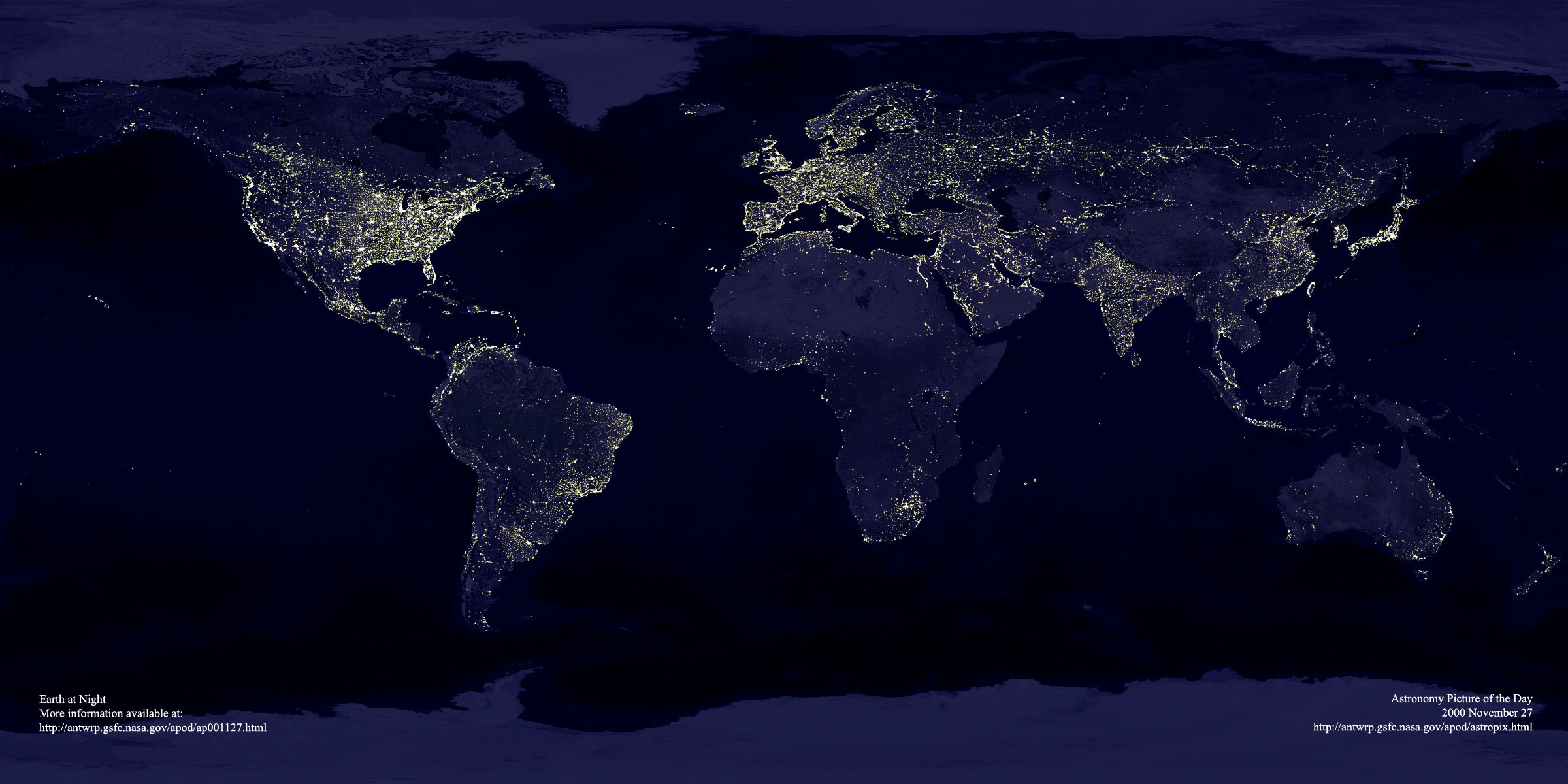
What part of the definition of life is being presented here? Which aspect of that definition is emulated by this picture? Click on the image to enlarge it. Write down your answer and why you think it is true.


Thursday, 31 March 2011
VFABP Collage
Viruses/Fungi/Archaea/Bacteria/Protista Collage Guidelines
· Pick one clade of Virus, Archaea, Bacteria, Fungi, or Protista
· Different clade for everyone
o First come first serve
o Virus
o Archaea
o Bacteria
o Protista
§ Excavata
§ Chromalveolata
§ Cercozoa, Foramnifera, and Radiolaria
§ Amoebozoa
§ Choanozoa
o Fungi
§ Basidiomycota
§ Ascomycota
§ Zygomycota
§ Chytridomycota
· For the collage, use
o Pictures from a magazine
o drawings
o photographs
o Remember- collage means many intersecting pictures covering the entire page
· One page typed paper
o Follow the Source Guidelines given out earlier
§ Books need author, title, publisher, publish date, publish location, page numbers
§ Magazines and journals need author, name, article title, date, and page numbers
o Be careful to report all sources used in the Works Cited
o Be careful to report all sources used within the body of the paper, i.e. (Name, Year), or (Benjeloun, March 32nd, 2024).
o 2.5 cm margins on all sides, 10-12 pt. font, Times New Roman or Ariel.
· For research, use
- The web- official science sites only
- Use Wikipedia to get real sources
- Your Biology book
Monday, 14 March 2011
The Tree of Life
For Biology: Go to the Tree of Life. This website is a wiki, designed to be all-encompassing for all of life, with pictures and text on every species.
Click on the tree on the front page, or go to “Root of the Tree”, and follow the links for awhile, simply exploring. Each page is constructed as a branching cladogram.
Pick a clade and read about it. Write down the clade's name and a short summary of what you learned. Be sure the summary is in your own words and not copying from the website. Remember, other than scientific words, you may not have more than two words in a row the same as the website.
Be sure to include the full source site, including url, Title of the website, Title of the page, date it was written (if mentioned), and the date you accessed it.
Click on the tree on the front page, or go to “Root of the Tree”, and follow the links for awhile, simply exploring. Each page is constructed as a branching cladogram.
Pick a clade and read about it. Write down the clade's name and a short summary of what you learned. Be sure the summary is in your own words and not copying from the website. Remember, other than scientific words, you may not have more than two words in a row the same as the website.
Be sure to include the full source site, including url, Title of the website, Title of the page, date it was written (if mentioned), and the date you accessed it.
Wednesday, 3 November 2010
Your Footprint
In some classes today, I mentioned your ecological footprint. This is how many Earths we would need if everyone lived life just like you do. You plug in information about your life, and it tells you your Carbon Footprint, your Food Footprint, your Housing Footprint, and your Goods and Services Footprint, all in a chart. If you're interested in how much energy you use and how much you waste, and how to reduce your footprint to not use up precious resources on our planet, visit this link. You'll have to go through a couple steps to get to the quiz. For distances, you may want to use the distance calculator.
Wednesday, 6 January 2010
Science Article Titles
Effective immediately, the Critical Evaluations aforementioned will be expanded, such that all students will now be required to provide a list of the titles of both Science Friday and World Science in their respective subjects. On Science Friday this will be due on Mondays; for World Science this will be due two school days after World Science comes out, or the next Monday, whichever comes first. Science Friday comes out every Monday; World Science comes out twice a month, but at random intervals.
Only titles are due, and only titles from that issue that just came out. On any given Friday, you will have between five and ten Science Friday articles. Any given World Science issue will have up to twelve articles. Look through the articles and find the ones that pertain to your respective discipline (marine biology, biology, chemistry, or chemistry & physics). Write a list of the titles down. If you are unsure if an article is about your discipline just from looking at the title, you may have to click on the link for World Science or listen for some thirty seconds to Science Friday.
The easiest way to do this is to put your email address into the World Science website, in the top left corner, and wait to receive your email with the links. If you do not do this, it will become very difficult to determine which articles belong to the most recent disbursement of articles. For Science Friday, the easiest way is to go to iTunes and subscribe to the free podcast of "Science Friday" by putting "Science Friday" into the search parameter. If you do not have iTunes, you can download it for free here (even if you don't own an iPod). If you do not have iTunes and don't want to download it, you can remember to check Science Friday on your own every weekend.
You will be graded by percentage of the number of articles, receiving points for every correct article you include, and for every incorrect article you do not include. Thus, for example, if your class is Biology, and you include an article on "Breast Cancer Gene Patents Challenged", that is clearly about biology, and you get points. If you include an article on "Do Moon Craters Harbor Caches of Water Ice", this is clearly not about biology, and you will lose points.
Hopefully, this will help all students 1) realize that there are many articles to pick from in their Extra Credit Critical Evaluations, which are still due at the end of each month, and 2) become more inspired to do the Extra Credit.
Only titles are due, and only titles from that issue that just came out. On any given Friday, you will have between five and ten Science Friday articles. Any given World Science issue will have up to twelve articles. Look through the articles and find the ones that pertain to your respective discipline (marine biology, biology, chemistry, or chemistry & physics). Write a list of the titles down. If you are unsure if an article is about your discipline just from looking at the title, you may have to click on the link for World Science or listen for some thirty seconds to Science Friday.
The easiest way to do this is to put your email address into the World Science website, in the top left corner, and wait to receive your email with the links. If you do not do this, it will become very difficult to determine which articles belong to the most recent disbursement of articles. For Science Friday, the easiest way is to go to iTunes and subscribe to the free podcast of "Science Friday" by putting "Science Friday" into the search parameter. If you do not have iTunes, you can download it for free here (even if you don't own an iPod). If you do not have iTunes and don't want to download it, you can remember to check Science Friday on your own every weekend.
You will be graded by percentage of the number of articles, receiving points for every correct article you include, and for every incorrect article you do not include. Thus, for example, if your class is Biology, and you include an article on "Breast Cancer Gene Patents Challenged", that is clearly about biology, and you get points. If you include an article on "Do Moon Craters Harbor Caches of Water Ice", this is clearly not about biology, and you will lose points.
Hopefully, this will help all students 1) realize that there are many articles to pick from in their Extra Credit Critical Evaluations, which are still due at the end of each month, and 2) become more inspired to do the Extra Credit.
Monday, 5 October 2009
Darwin's Blog
I just came across a most amazing blog. Evidently it has just recently been unearthed, a very old copy of Charles Darwin's blog, on his Voyage of the Beagle! I'd encourage everyone to visit, as he slowly posts excerpts from his amazing trip that is beginning to change the world, and everything we understand about reality.
Wednesday, 18 February 2009
Great Photos of Diverse Bacteria and Protozoans
I found this page while doing research for 7th grade. I love the pictures. Great color. Better than a photocopied textbook any day.
Enjoy.


 http://www.bio.mtu.edu/the_wall/phycodisc/CHLOROPHYTA/
Enjoy.
http://www.bio.mtu.edu/the_wall/phycodisc/CHLOROPHYTA/
Subscribe to:
Posts (Atom)