In some classes today, I mentioned your ecological footprint. This is how many Earths we would need if everyone lived life just like you do. You plug in information about your life, and it tells you your Carbon Footprint, your Food Footprint, your Housing Footprint, and your Goods and Services Footprint, all in a chart. If you're interested in how much energy you use and how much you waste, and how to reduce your footprint to not use up precious resources on our planet, visit this link. You'll have to go through a couple steps to get to the quiz. For distances, you may want to use the distance calculator.
Wednesday, 3 November 2010


Monday, 18 October 2010
Article Review
8th Grade Science: Read and outline one article at this site. Be prepared to present a summary in class.
Friday, 12 February 2010
Massive Molarity
For the past week, we've been studying Moles. Today I want you to work on the equations in the computer lab. For the molecules listed below, determine:
Lastly, figure out what the percentage of each element is in the molecule. This is easier than you might expect. Take the individual masses of each element, and divide them by the overall mass.
Following is a list of the molecules I'd like analyzed:
- How many grams are in a mole.
- How many moles are in a gram.
- What the percentage of each element is in the formula.
- H = 1.0079 amu
- O = 15.999 amu
- There are two Hydrogens in Water.
- Therefore, 2(1.0079) + 15.999 = 18.015 amu.
- Now, transfer that directly into grams for the Molar Mass, and a mole of water weighs 18.015 g.
Lastly, figure out what the percentage of each element is in the molecule. This is easier than you might expect. Take the individual masses of each element, and divide them by the overall mass.
- H2 = 1.0079 * 2 = 2.0158 g
- O = 15.999 g
- H2 + O = 18.0148 g
- H2/H2O = 2.0158 / 18.015 = 0.1119 or 11.19%
- O/H2O = 15.999 / 18.015 = 0.8881 or 88.81%
Following is a list of the molecules I'd like analyzed:
- He
- O2
- C6H12O11
- H2
- LiOH
- H2PO4
- H2SO4
- PCl5
- SF6
- NaCl
- CsC2H3O2
- NH4ClO
- Li2CO3
- NCl3
- BCl3
- N2O3
- Cl2O7
- CO2
Thursday, 14 January 2010
The End of the World....?
For IPC, please go to Counterbalance and read the article pages on Angels and Demons and the Large Haldron Collider, and the science (or lack thereof) in Angels and Demons. This page links to four other pages that need to be read as well, to whit:
- Anti-Matter
- The Physics of Creation
- The God Particle
- Other Technical Notes
Wednesday, 6 January 2010
Science Article Titles
Effective immediately, the Critical Evaluations aforementioned will be expanded, such that all students will now be required to provide a list of the titles of both Science Friday and World Science in their respective subjects. On Science Friday this will be due on Mondays; for World Science this will be due two school days after World Science comes out, or the next Monday, whichever comes first. Science Friday comes out every Monday; World Science comes out twice a month, but at random intervals.
Only titles are due, and only titles from that issue that just came out. On any given Friday, you will have between five and ten Science Friday articles. Any given World Science issue will have up to twelve articles. Look through the articles and find the ones that pertain to your respective discipline (marine biology, biology, chemistry, or chemistry & physics). Write a list of the titles down. If you are unsure if an article is about your discipline just from looking at the title, you may have to click on the link for World Science or listen for some thirty seconds to Science Friday.
The easiest way to do this is to put your email address into the World Science website, in the top left corner, and wait to receive your email with the links. If you do not do this, it will become very difficult to determine which articles belong to the most recent disbursement of articles. For Science Friday, the easiest way is to go to iTunes and subscribe to the free podcast of "Science Friday" by putting "Science Friday" into the search parameter. If you do not have iTunes, you can download it for free here (even if you don't own an iPod). If you do not have iTunes and don't want to download it, you can remember to check Science Friday on your own every weekend.
You will be graded by percentage of the number of articles, receiving points for every correct article you include, and for every incorrect article you do not include. Thus, for example, if your class is Biology, and you include an article on "Breast Cancer Gene Patents Challenged", that is clearly about biology, and you get points. If you include an article on "Do Moon Craters Harbor Caches of Water Ice", this is clearly not about biology, and you will lose points.
Hopefully, this will help all students 1) realize that there are many articles to pick from in their Extra Credit Critical Evaluations, which are still due at the end of each month, and 2) become more inspired to do the Extra Credit.
Only titles are due, and only titles from that issue that just came out. On any given Friday, you will have between five and ten Science Friday articles. Any given World Science issue will have up to twelve articles. Look through the articles and find the ones that pertain to your respective discipline (marine biology, biology, chemistry, or chemistry & physics). Write a list of the titles down. If you are unsure if an article is about your discipline just from looking at the title, you may have to click on the link for World Science or listen for some thirty seconds to Science Friday.
The easiest way to do this is to put your email address into the World Science website, in the top left corner, and wait to receive your email with the links. If you do not do this, it will become very difficult to determine which articles belong to the most recent disbursement of articles. For Science Friday, the easiest way is to go to iTunes and subscribe to the free podcast of "Science Friday" by putting "Science Friday" into the search parameter. If you do not have iTunes, you can download it for free here (even if you don't own an iPod). If you do not have iTunes and don't want to download it, you can remember to check Science Friday on your own every weekend.
You will be graded by percentage of the number of articles, receiving points for every correct article you include, and for every incorrect article you do not include. Thus, for example, if your class is Biology, and you include an article on "Breast Cancer Gene Patents Challenged", that is clearly about biology, and you get points. If you include an article on "Do Moon Craters Harbor Caches of Water Ice", this is clearly not about biology, and you will lose points.
Hopefully, this will help all students 1) realize that there are many articles to pick from in their Extra Credit Critical Evaluations, which are still due at the end of each month, and 2) become more inspired to do the Extra Credit.
Monday, 5 October 2009
Darwin's Blog
I just came across a most amazing blog. Evidently it has just recently been unearthed, a very old copy of Charles Darwin's blog, on his Voyage of the Beagle! I'd encourage everyone to visit, as he slowly posts excerpts from his amazing trip that is beginning to change the world, and everything we understand about reality.
Friday, 29 May 2009
Creationism vs Evolutionism Forum
Hi students,
for those of you that might be able to drag yourselves out of bed by 9 over the weekend, there are some good discussions happening on the origins of the world and man. Here is the link to the Fes world sacred music festival with the program. The discussions are supposed to take place in French with an English translation.
These discussions are from 9 AM to 1 PM at the Musee Batha and cost about 100 Dirhams to get in. There is one on Saturday and one on Sunday.
(Definite bonus points to anybody who attends one of the sessions, and can provide proof.)
for those of you that might be able to drag yourselves out of bed by 9 over the weekend, there are some good discussions happening on the origins of the world and man. Here is the link to the Fes world sacred music festival with the program. The discussions are supposed to take place in French with an English translation.
These discussions are from 9 AM to 1 PM at the Musee Batha and cost about 100 Dirhams to get in. There is one on Saturday and one on Sunday.
(Definite bonus points to anybody who attends one of the sessions, and can provide proof.)
8th Grade Nutrition Test
Here it is! Just like our friend Morgan Spurlock your job will be to "eat" a whole days worth of McDonald's food. UNLIKE Morgan, your job will be to get NO MORE than 2250 calories (I'm taking it easy on the girls to be fair.) You also need to get all of the carbohydrates and protein, without getting more than your recommended amount of fat. You can get more than you need of protein and carbohydrates, but not more than 2250 calories.
Rules:
MAXIMUM - 2250 calories
MAXIMUM - 87.5 grams of fat
MINIMUM - 253 grams of carbohydrates
MINIMUM - 56 grams of protein
3 meals - breakfast has to be breakfast foods.
You must have 1 soda.
You must have a main dish and a side (ex. burger and fries)
Bonus: Get enough Vitamin A 9 milligrams
Enjoy!
Rules:
MAXIMUM - 2250 calories
MAXIMUM - 87.5 grams of fat
MINIMUM - 253 grams of carbohydrates
MINIMUM - 56 grams of protein
3 meals - breakfast has to be breakfast foods.
You must have 1 soda.
You must have a main dish and a side (ex. burger and fries)
Bonus: Get enough Vitamin A 9 milligrams
Enjoy!
Thursday, 28 May 2009
7th Grade: Excretory System! - 24.3
You always wanted to know how peepee worked, right?
Ok, it's too gross to think about. But I'm going to make you, for a grade. Ha!
Your urinary system, briefly
Your urinary system, the way your doctor thinks about it
Urinary system anatomy, big size
Kidney and nephron
Nephron, up close
Bladder!
Urine... ewwww....
Ok, it's too gross to think about. But I'm going to make you, for a grade. Ha!
Your urinary system, briefly
Your urinary system, the way your doctor thinks about it
Urinary system anatomy, big size

Kidney and nephron

Nephron, up close

Bladder!
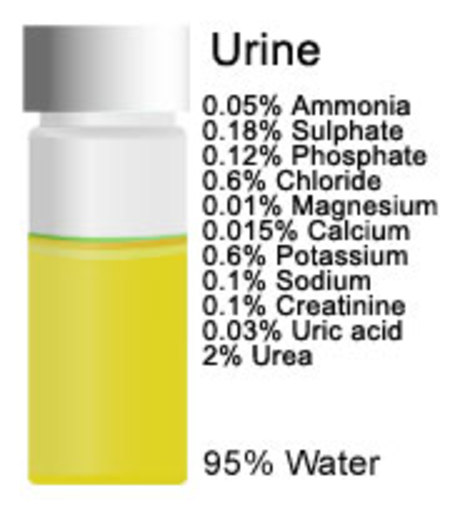
Urine... ewwww....
7th Grade: Respriratory System!
You knew that talking about lungs was fun... and pretending to do mouth-to-mouth on your classmates is not an option at school. So, what to do? Look at somebody's vocal cords through a tube going down their nose! Fly through the bronchi! Animate your alveoli! See your cilia! Look at your lungs!
Oh, the joys of YouTube
Bugs Bunny's Creator - Vocal cords, LIVE!
Flying through the bronchi
Animated alveoli
Motion of Cilia
Lungs of a smoker
Oh, the joys of YouTube
Bugs Bunny's Creator - Vocal cords, LIVE!
Flying through the bronchi
Animated alveoli
Motion of Cilia
Lungs of a smoker
Wednesday, 27 May 2009
Tuesday, 26 May 2009
General Science: Harvard's Multimedia Page
COOOOOOOOOL videos! Ok, they're college-oriented, but if you're a nerd like me - or you just like to pretend you are - go to this page full of extremely cool animations and videos. I bet even Mr. Mills and Mr. Rice's replacement would like them.
Harvard's Molecular and Cell Biology Multimedia Page
Harvard's Molecular and Cell Biology Multimedia Page
Monday, 25 May 2009
7th Grade: Resources for Activity 23-2, page 642-643
Use the links in this article to answer the following questions.
Pictures of Human Blood, Bird Blood, and Frog Blood. Red blood cells are called erythrocytes, white blood cells are called lymphocytes, and platelets are called thrombocytes.
You can also see this human lymphocyte with special stain under a microscope, and scanning electron microscope (SEM) pictures of an individual human lymphocyte and human blood. From these pictures, and the three microscope slides of different bloods, answer the questions below.
In your classwork notebook, answer the Analyze and Apply questions as well as you can. Observe carefully.
Pictures of Human Blood, Bird Blood, and Frog Blood. Red blood cells are called erythrocytes, white blood cells are called lymphocytes, and platelets are called thrombocytes.


You can also see this human lymphocyte with special stain under a microscope, and scanning electron microscope (SEM) pictures of an individual human lymphocyte and human blood. From these pictures, and the three microscope slides of different bloods, answer the questions below.


In your classwork notebook, answer the Analyze and Apply questions as well as you can. Observe carefully.
Friday, 22 May 2009
6th Grade: Links for Unconformities
These links should help with any confusion on the pictures of unconformities.
Diagrams:
Making a disconformity
Making an angular disconformity
A page on all the topics
Here are some decent pictures of unconformities
Grand Canyon
Angular Unconformity 1
Angular Unconformity 2
Disconformation
A gallery of pictures
Diagrams:
Making a disconformity

Making an angular disconformity

A page on all the topics
Here are some decent pictures of unconformities
Grand Canyon

Angular Unconformity 1

Angular Unconformity 2

Disconformation

A gallery of pictures
5th Grade: Biome Diagram Questions
Biome Diagram:
Go here and answer the questions below for Monday, 24/5. Answer these questions in your HW notebook.
1. As far as you can tell, which two biomes take up the largest areas on this diagram?
2. As far as you can tell, which two diagrams take up the smallest areas on the map?
3. Which biome has the widest range of average temperatures?
4. What kind of biome do you have if the annual precipitation is 100 cm and the average temperature is 0 degrees Celsius?
5. What is the minimum precipitation a savanna needs to receive each year, with average temperature 25 degrees, to not turn into a subtropical desert?
Go here and answer the questions below for Monday, 24/5. Answer these questions in your HW notebook.

1. As far as you can tell, which two biomes take up the largest areas on this diagram?
2. As far as you can tell, which two diagrams take up the smallest areas on the map?
3. Which biome has the widest range of average temperatures?
4. What kind of biome do you have if the annual precipitation is 100 cm and the average temperature is 0 degrees Celsius?
5. What is the minimum precipitation a savanna needs to receive each year, with average temperature 25 degrees, to not turn into a subtropical desert?
5th Grade: Biome Links
Here are some useful links to make the ides of the book easier to understand. They can also help you for your Chapter 5 Poster Project.
A useful site on ecosystems and biomes:
Ecosystems of our World
Biome Maps: Each of these is a little different. Why do you think this is?
Blue Planet Biomes
United States Bioregion Map <-- This is pretty complicated, because ecosystems come in as many varieties as places on earth. Interactive Biome Map: The Wild Classroom: Biome Map
The main Wild Classroom site can be reached at Wild Classroom Home
Now, here are links about food chains, food webs, and energy pyramids:
Food Chains and Food Webs
Two examples of food chains
An example of a food web
Also, here are links about the different kinds of cycles that happen in different biomes:
Here is a video describing the water cycle. This animation might also be useful.
Here is a picture of the water cycle. You can see the rest of web site at The Blue Planet.
Biogeochemical cycles talks about all the cycles, including, the water cycle, the carbon dioxide cycle, and the nitrogen cycle.
A useful site on ecosystems and biomes:
Ecosystems of our World
Biome Maps: Each of these is a little different. Why do you think this is?
Blue Planet Biomes
United States Bioregion Map <-- This is pretty complicated, because ecosystems come in as many varieties as places on earth. Interactive Biome Map: The Wild Classroom: Biome Map
The main Wild Classroom site can be reached at Wild Classroom Home
Now, here are links about food chains, food webs, and energy pyramids:
Food Chains and Food Webs
Two examples of food chains

An example of a food web

Also, here are links about the different kinds of cycles that happen in different biomes:
Here is a video describing the water cycle. This animation might also be useful.
Here is a picture of the water cycle. You can see the rest of web site at The Blue Planet.

Biogeochemical cycles talks about all the cycles, including, the water cycle, the carbon dioxide cycle, and the nitrogen cycle.
Thursday, 21 May 2009
7th Grade: Circulatory System - 23.1
After you've tried the explore activity on p. 625 of your textbook, check out some of these links that can
You can use the first two links to locate the circulatory system and then figure out how blood moves inside of it.
Gross Anatomy : Use the section on cardiovascular system
Blood Cells
Smaples of oxygenated and de-oxygenated blood
These animations go along with the pictures in section 23.1
Simple Animation of Heart Pumping
Systemic Cirulation
Blood cells moving through capillaries
When they open your heart for surgery, they have to use one of these.
A heart-lung machine
You can use the first two links to locate the circulatory system and then figure out how blood moves inside of it.
Gross Anatomy : Use the section on cardiovascular system
Blood Cells
Smaples of oxygenated and de-oxygenated blood
These animations go along with the pictures in section 23.1
Simple Animation of Heart Pumping
Systemic Cirulation
Blood cells moving through capillaries
When they open your heart for surgery, they have to use one of these.
A heart-lung machine
Tuesday, 19 May 2009
7th Grade: Human Body Systems
Here are a whole bunch of good links you cna use to get started in your quest for independent learning! That means: you go do the work outside of class! Yay!
Ok, joking aside, I hope these are good tools to help you out in learning about your own body and possibly even learning something that can help others.
Of course, you can always search around for yourself on Google and YouTube. I probably spend more time than I should myself, but the stuff just fascinates me.
Enjoy,
- Mr. Rice
Human Gross Anatomy :This one is a little intense on names, but very detailed.
Human Body Systems : This one is more for middle school students.
Kids Konnect - Human Body : Ok, this site really just takes a whole lot of other links and sends you to them, but the pictures are fun and help you understand what you're going to find.
My own video and image picks:
Torso with labeled organs
Detailed Muscular System
Human body 101
Human Body Systems Revealed
Ok, joking aside, I hope these are good tools to help you out in learning about your own body and possibly even learning something that can help others.
Of course, you can always search around for yourself on Google and YouTube. I probably spend more time than I should myself, but the stuff just fascinates me.
Enjoy,
- Mr. Rice
Human Gross Anatomy :This one is a little intense on names, but very detailed.
Human Body Systems : This one is more for middle school students.
Kids Konnect - Human Body : Ok, this site really just takes a whole lot of other links and sends you to them, but the pictures are fun and help you understand what you're going to find.
My own video and image picks:
Torso with labeled organs

Detailed Muscular System

Human body 101
Human Body Systems Revealed
Monday, 18 May 2009
Article Summaries 9th Grade 6th Grading Period
Hey students,
Sorry that I did not get this up earlier. The assignment is the same as last time.
To review:
Post 4 article summaries as comments in the appropriate grade level, with your opinion about each one.
- DO NOT copy and paste the article, it will not count.
- DO include the link to the article.
Post 1 response to another student's summary with your opinion.
Please do not include any other languages (unless mentioned by the article).
Please do not include other student's names except for the original poster.
Again, this should be an easy 25 points.
Sorry that I did not get this up earlier. The assignment is the same as last time.
To review:
Post 4 article summaries as comments in the appropriate grade level, with your opinion about each one.
- DO NOT copy and paste the article, it will not count.
- DO include the link to the article.
Post 1 response to another student's summary with your opinion.
Please do not include any other languages (unless mentioned by the article).
Please do not include other student's names except for the original poster.
Again, this should be an easy 25 points.
Subscribe to:
Posts (Atom)